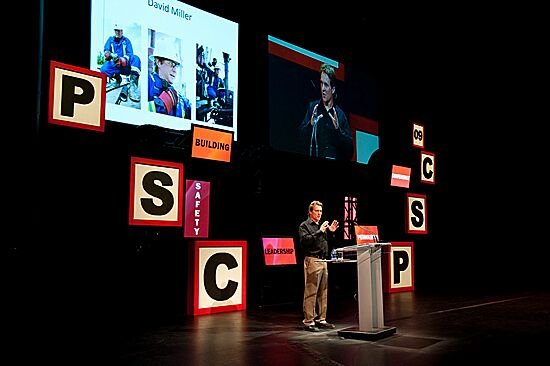
A powerful, firsthand safety presentation for high-hazard industries, helping workers and supervisors recognize risk, challenge shortcuts, and make the decisions that get everyone home.
Friday night, Labor Day weekend. A crew chose the shortcut. Two men didn't come home.
I'm the 80 percent burn survivor who was standing next in line.
One shortcut. Two lives lost. Decades of living with the cost.
That night was decades ago, but the human element on today's sites hasn't changed. Every job comes down to a worker's choice, shaped by schedule pressure, what the crew knows and doesn't know, and the systems around them. And underneath it sits a belief so many workers carry: that they can take the risk and still go home.
This presentation walks your crew through what happened that night, moment by moment, and what it cost. Then it gives them a tool to carry onto the site: healthy hesitation — the internal pause before stepping into something dangerous.
The DecisionPlan A was the safe way. Plan B got everyone home for the long weekend. How good people end up removing their own critical controls.
Three SecondsAbout three seconds that ended two lives and changed the surviving eight forever.
What I Didn't KnowNot reckless men. A gap in what we knew, and a system that let it happen. What that crew didn't understand about flash fire.
The CostInside the burn unit, and the years of rehab and recovery that followed. A climb that never fully ends.
Today's SitesHigh-energy hazards on today's sites. The same human element, the same knowledge gap, just wearing different coveralls.
Healthy HesitationThe pause that was missing on our site that night. How workers and supervisors can build it into every job.
What Your Team Takes Home
A story they’ll feel. Useful on the next shift
What your people will be able to do
✓Recognize when schedule pressure is pushing them toward a dangerous shortcut.
✓Identify assumptions and gaps in their hazard awareness before work begins.
✓Understand why experienced workers can make unsafe decisions.
✓Give supervisors practical language for supporting a worker who pauses or stops a job.
✓Follow critical controls even when the safe option takes longer.
For Workers
Workers leave with one question to ask before any shortcut, and a reason to ask it they won't forget. Healthy hesitation isn't weakness. It's the thing that was missing on our site that night.
For Supervisors
Supervisors leave with a hard look at what they reward on site, and practical words for the next time a worker chooses the slower, correct way.
Speaks your language:SIF preventionHuman & Organizational PerformanceCritical controlsStop work authorityFR clothing
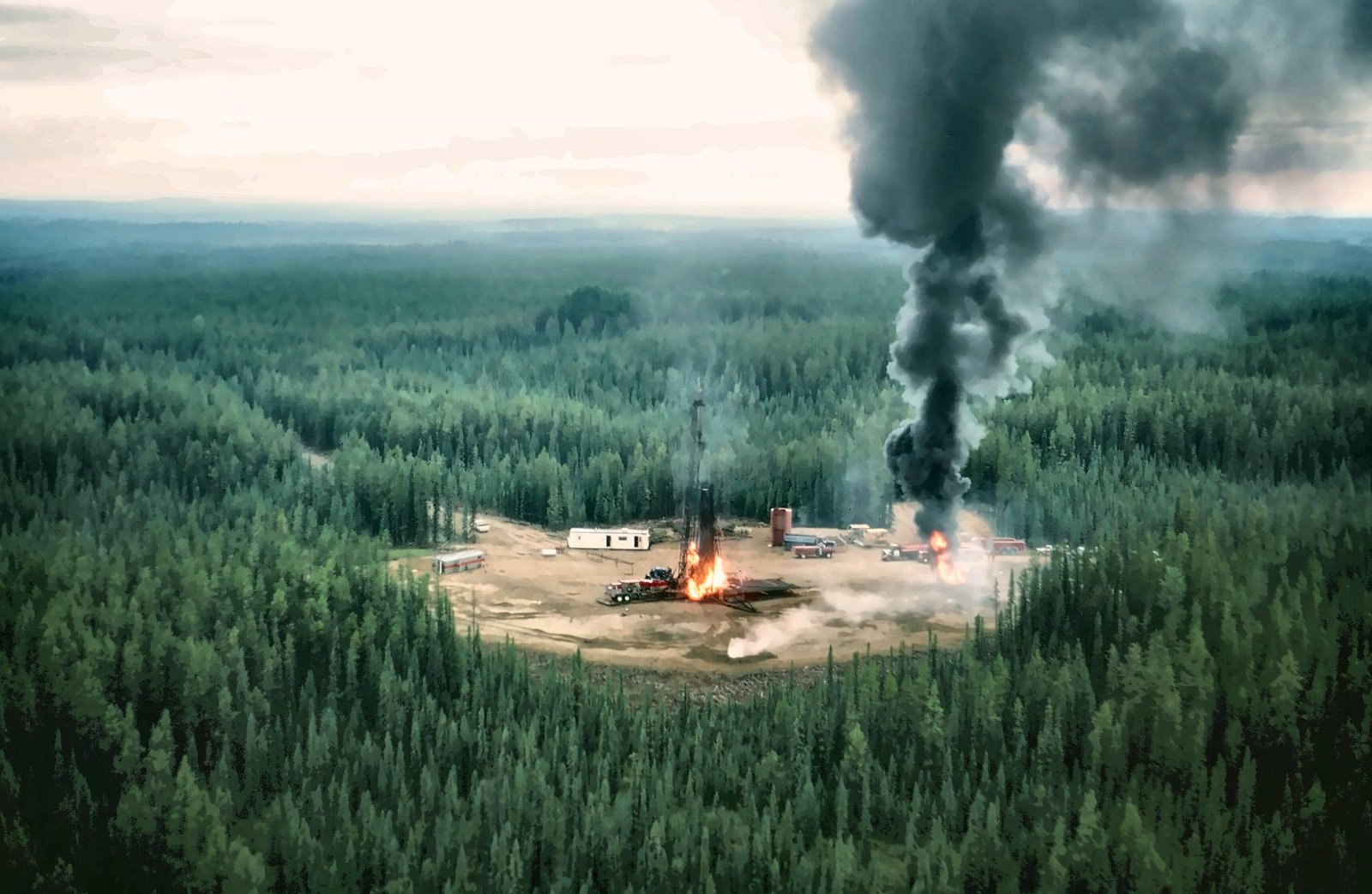
The well site from the air, Central AlbertaTwo men went to work here and did not come home.
The Story
Plan A or Plan B
We were minutes from finishing a gas well job. Doing it right meant waiting half a day for equipment from Edmonton. It was Friday night of the long weekend, every man on that crew wanted to go home, and there was pressure from above to get the job finished.
We chose Plan B. In one decision, weeks of safe work on a closed system became an open one.
What happened in the next three seconds, and what none of us knew that could have saved two lives, is the story I tell on stage.
I spent three and a half months in a burn unit and four years in Jobst garments, custom-made compression garments worn over my burn scars day and night. The two men we lost never got the decades I've had.
We were not reckless men. We simply didn't know what we needed to know to survive that day.
The Evidence
What three seconds did
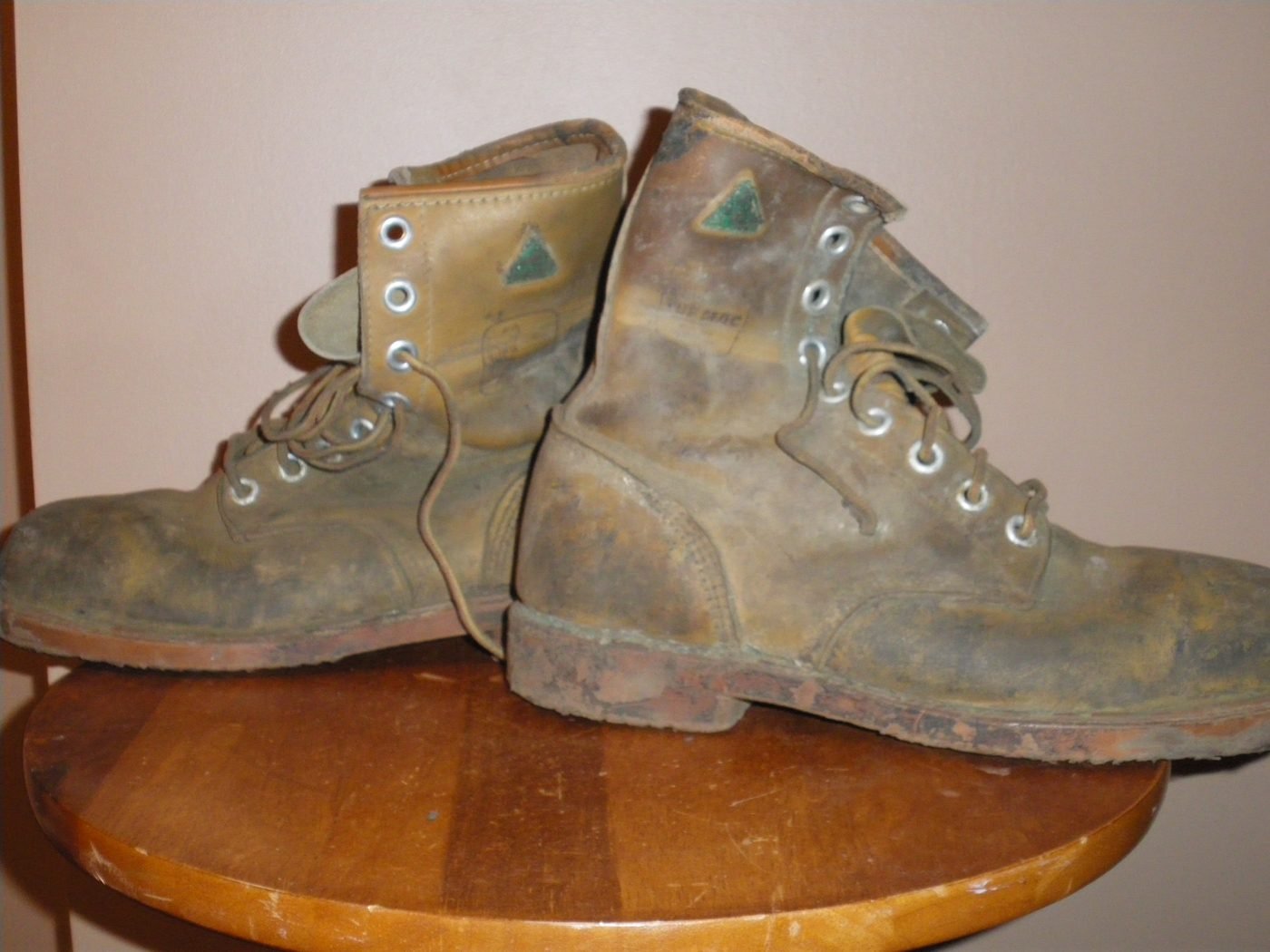
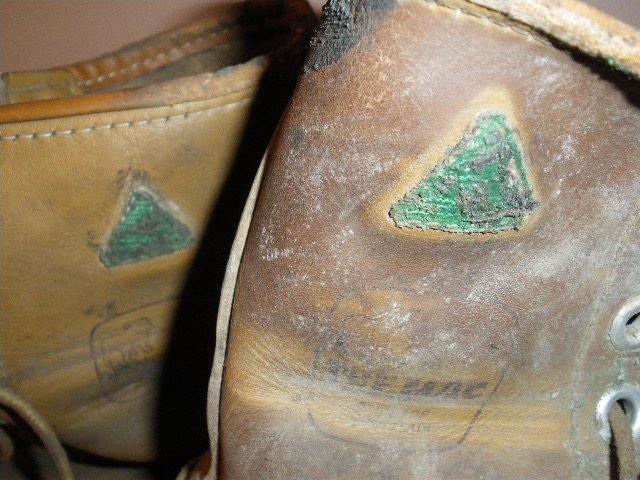
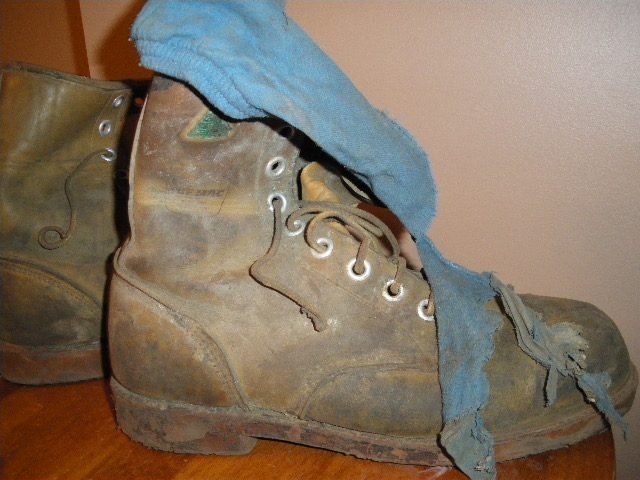
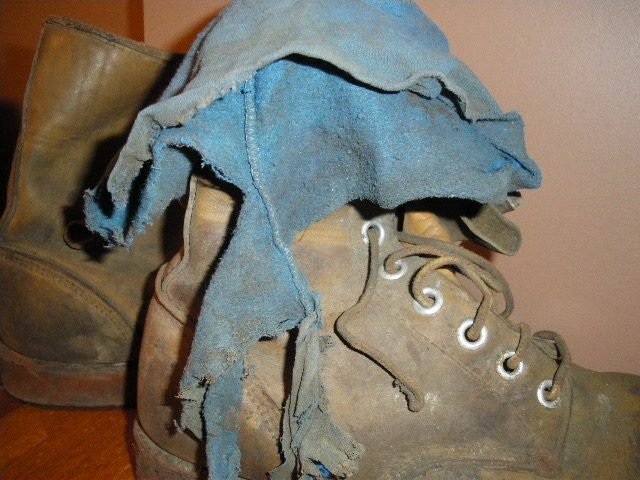
The boots and clothing I was wearing the day of the flash fire. Tap any photo to see it larger.
Work bootsThe boots I wore that day.Melted emblemThe heat melted the CSA safety emblem in about three seconds.Sweatpant remnantWhat was left of my synthetic sweatpants. They melted into my legs. This is why we wear FR.
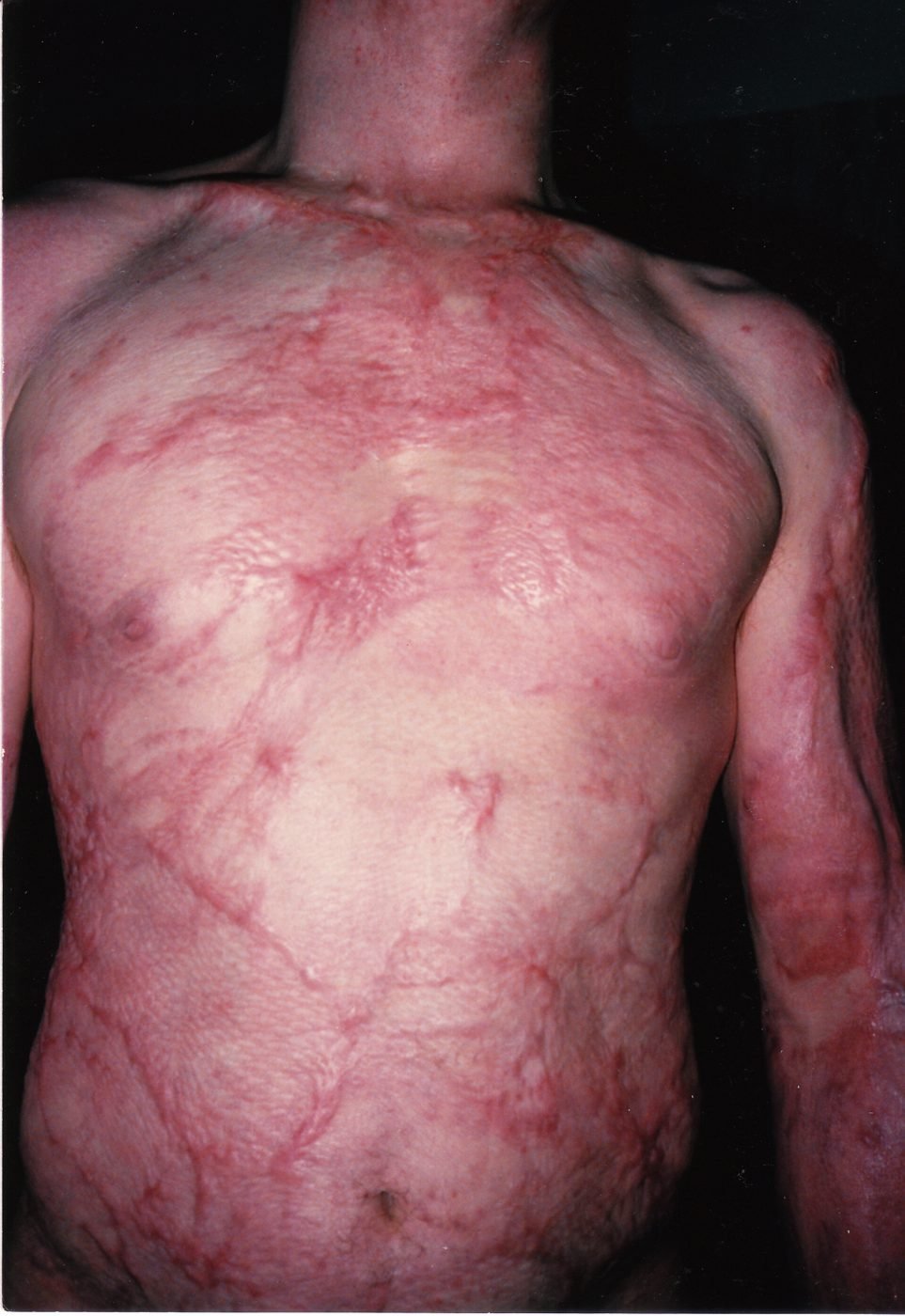
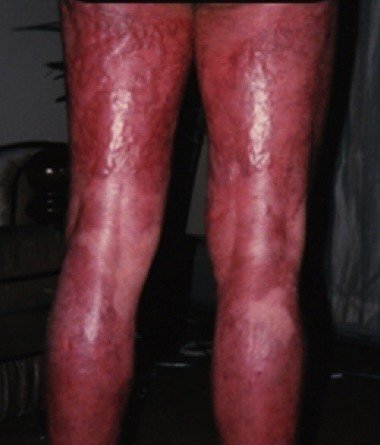
These photos show my healed burn scars. You can choose whether to see them.
Under the clothing
My chest six months after the fire, and my legs, where the sweatpants melted into my skin.
About David
He worked the patch. He was there
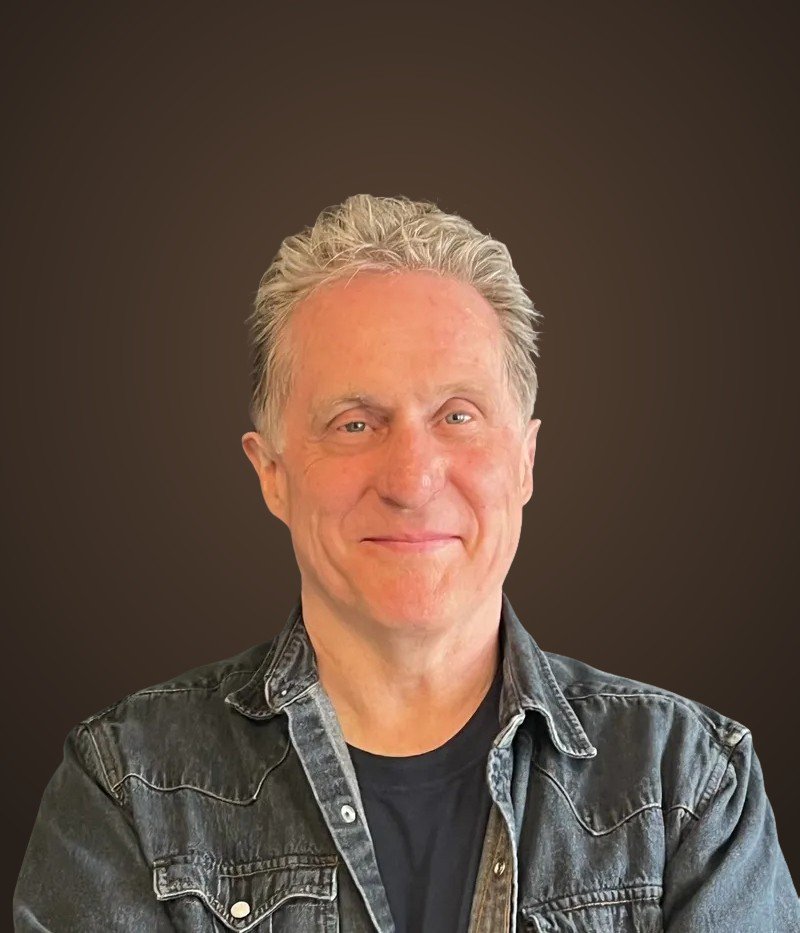
As a young oil patch worker, David Miller had been accepted into engineering, days away from starting university, when a flash fire on a Central Alberta gas well burned 80 percent of his body and took the lives of two coworkers.
After his recovery he earned his education degree and taught high school before returning to the oil patch. That fire happened before fire-resistant workwear was standard on Alberta well sites, and its lessons have stayed with him ever since. Today David speaks to high-hazard industries about the gap that nearly killed him — because injury rates have fallen for years, but serious injuries and fatalities haven't fallen nearly as fast.
Based in Edmonton, Alberta · Available across Canada
Back on the Rig Floor
He went back
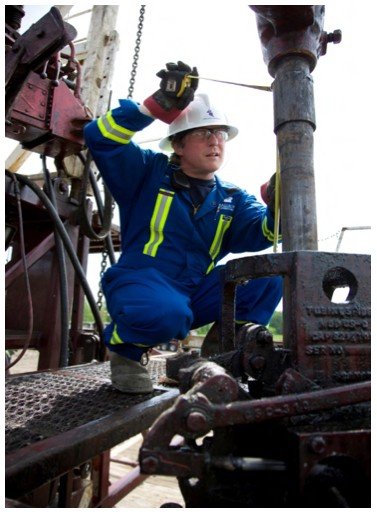
After years of recovery and teaching, David got back on the horse. He returned to the oil patch, first with service companies and then for years as a consulting wellsite supervisor, on the same kind of equipment that burned him.
He frequently told crews his story, and why the FR coveralls they wore mattered. Sometimes he opened the front of his coveralls so they could see the burns for themselves.
Back on the rig floor as a wellsite supervisor. Same equipment, same risks, different choices.
Oil & GasUpstream, midstream, downstream. Frac, flowback, drilling and service crews.
Industrial & ConstructionSafety days, all-hands meetings and kickoffs in high-hazard workplaces.
Leaders & SupervisorsConferences and leadership sessions focused on SIF prevention and safety culture.
Book David
Bring this talk to your crew
Tell me your event date, location, audience and format. I read every message personally.
Available for conferences, safety meetings, orientations, and training days30 to 60 minutes, tailored to your eventQ&A and toolbox-talk add-ons available